October 13, 2026
The Luxury of Knowing
The Luxury of Knowing
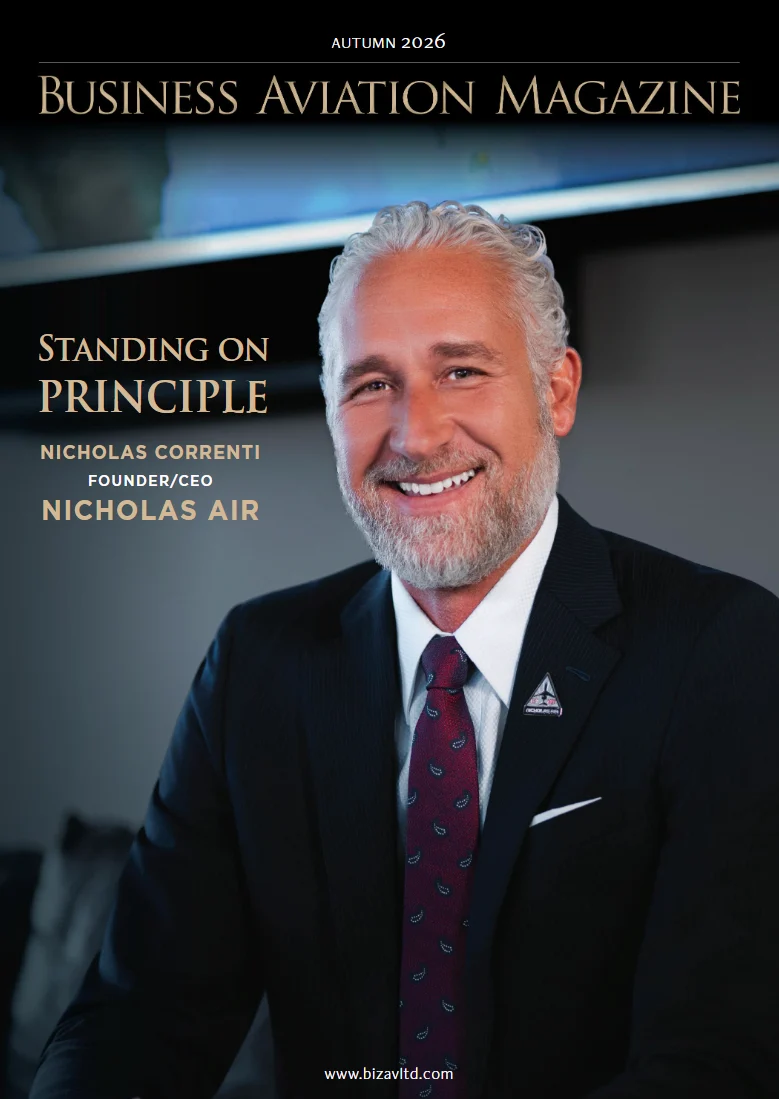
In an industry obsessed with scale, Nicholas Correnti is still betting on something much harder to quantify, knowing people.
For almost three decades, the founder of NICHOLAS AIR has resisted the temptation to simply get bigger. From its Mississippi roots, the company has grown carefully, building its own fleet, its own teams and, perhaps most importantly, its own culture. The result is a private aviation experience designed to feel less like a transaction and more like a relationship.
Correnti talks about NICHOLAS AIR much as he talks about Ferrari, not simply as a machine, but as an experience, a story and something people want to belong to. That philosophy runs through everything, the aircraft, the people, the obsessive attention to detail and the decision to grow without sacrificing the intimacy that made the company distinctive in the first place.
It is a remarkably human proposition in an increasingly automated world. Know the member. Know the aircraft. Know the person answering the phone. And when something goes wrong, make it right.
Nearly thirty years on, NICHOLAS AIR has grown considerably. But as Correnti tells us, the real challenge has never been getting bigger. It has been getting bigger without losing what made people want to be there in the first place.
We sit down with Nicholas Correnti to talk growth, ambition, aviation, technology, culture and why, in private flying, the greatest luxury may still be being known.
Max Raja: NJ, the last time we spoke you described NICHOLAS AIR as an oak tree, slow to grow, with vast roots. How has that growth evolved the company’s character since then?
Nicholas Correnti: Growth is always an evolution. The larger you get, the more challenging it becomes to hold the standard. It’s the same reason the Four Seasons or the Ritz don’t operate 500 room resorts, they keep limited keys. Over nearly thirty years you’ve got to call it measured growth. 2020 was when everything took off, and trying to ramp up fast enough without losing the customer service or the fine touches was the real test. We got through it because it comes down to people. You have to have good people who buy into the vision and the product you’re trying to offer.
I’ve always loved Ferrari. The car itself can be mechanically imperfect, yet for that price they sell an experience and a story that people want to be part of. That’s exactly what I’m trying to do. I want to sell an experience and a story, somewhere people feel heard, appreciated, valued and have a voice. That applies to employees and customers alike. You’re dealing with Type-A personalities who run businesses and are used to having their way. They don’t want a cold service, they want something personable. It’s a relationship. So, we’ve stayed with the deep-rooted approach rather than rushing out to buy fifty airplanes the way some others still are.
Max Raja: You’ve deliberately capped membership. It was around a thousand last time, where do things stand now, and how are you protecting service levels as the numbers rise?
Nicholas Correnti: We’re at about 1,280. That’s the live debate right now, primarily for me, making sure that as we continue past the old threshold the service doesn’t start to degrade. We haven’t seen that yet. Technology has been a big help, and we’re always investing in better systems and processes to keep consistency, which is the real challenge as you get bigger. We’re not saying we’ll stop adding members, but we’re doing it carefully.
Max Raja: You let member behaviour and data drive fleet decisions. What are Members asking for today that the wider industry isn’t delivering?
Nicholas Correnti: Consistency. That’s probably the word Members don’t always say out loud, but it’s their expectation. They want to pick up the phone, hear a familiar voice, and already have someone who predictably knows what they need. A lot of companies miss that mark. Members who come to us from the larger operators often say those companies are excellent operators, but they’ve grown so big they’ve lost the consistency and the authenticity. You’re just a number, member 1,000, send him a Phenom 300, done. It feels cold. Many are also pushing everything into apps and portals. There’s no relationship there, you’re just ordering a ride.
Max Raja: You’ve based the aircraft around homes, experiences and hospitality on the ground. What are you really building around the member beyond the flight itself?
Nicholas Correnti: We’re trying to put packages together. It sounds straightforward but executing it is harder than it looks. I have a Member who’s been with us about eight years, he’s become a friend, actually was a friend before. He owns a big construction company and a country club in South Carolina. He looked at me and said, “You’re crazy, NJ. Why aren’t you putting packages together so it’s turnkey?” So, we did a golf trip to Scotland that he helped curate. Eight people, five rounds on courses you normally can’t get on, castle accommodation, private chefs, wine tastings, bourbon tastings, the whole experience. We flew them out of South Carolina as a complete package. We’ve done similar things with properties in Montana. Private air travel is the necessity, the breadwinner, but these programmes make sense because people are busier than ever. Entrepreneurs especially don’t always have time to sit down and plan every detail of a trip. If they can look at a Montana fishing package or a Scotland golf package, see the price, and know everything is handled, that removes a huge amount of friction.
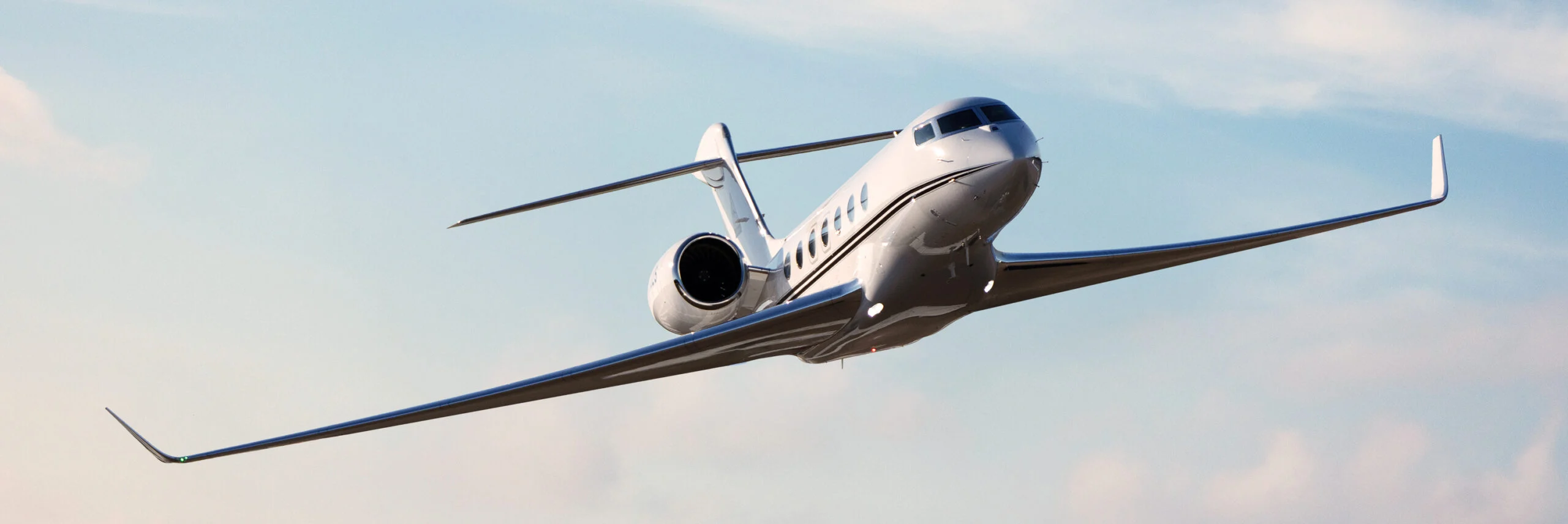
Max Raja: The G600 was your move into ultra-long range. Now that members are flying it, what has surprised you most about how they use it?
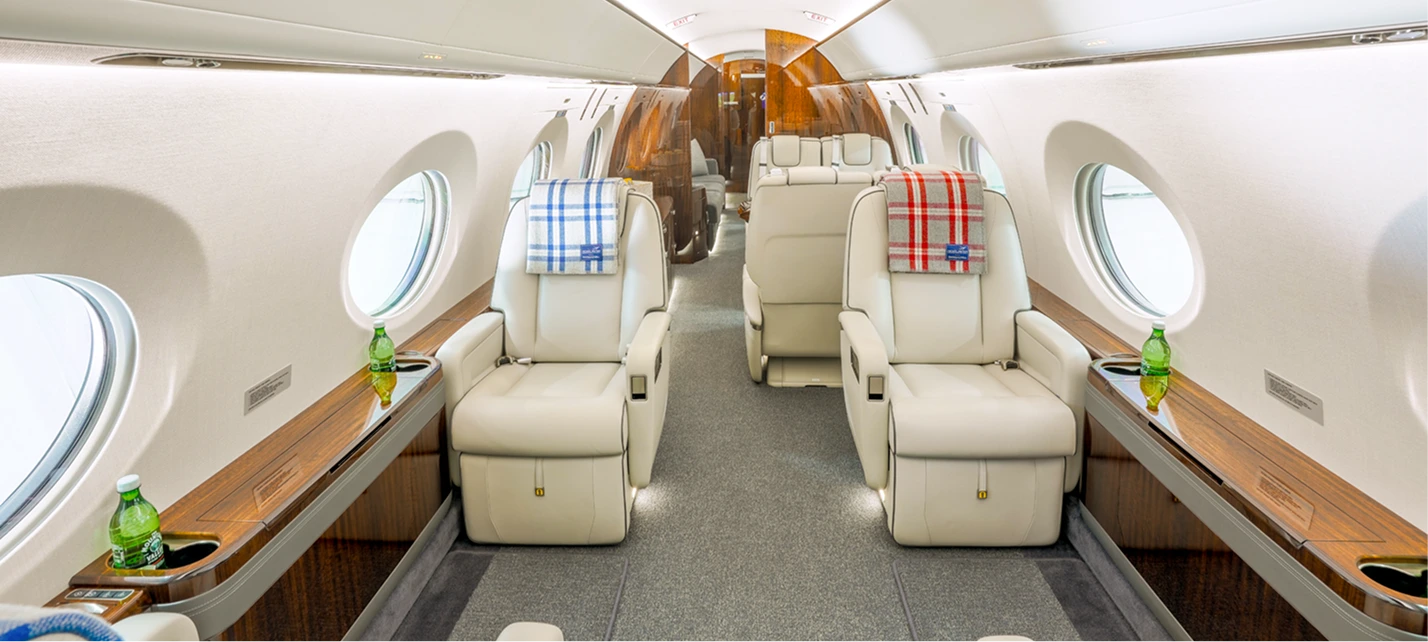
Nicholas Correnti: How readily they take it on short trips. Once you get on a Gulfstream, you never want to go back. They’ll do the sensible long sector, Charlotte to Los Angeles, and then the next thing you know they’re requesting it for Charlotte to Charleston or Charlotte to Miami. It’s an hour flight, but they’re happy to splurge for the cabin. That surprised me.
Max Raja: Does that mean more Gulfstreams are coming into the fleet in the near future?
Nicholas Correnti: I want to get through some of the current instability first, geopolitics, oil prices. Ultra-long range is always the first product to get scaled back if there’s any kind of pullback. We’re being careful.
Max Raja: The Phenom 300E and Latitude deliveries are tied into internal pilot upgrades. How much of fleet growth is about pilot retention and giving people a clear path?
Nicholas Correnti: Fleet growth itself isn’t driven by retention, but we stay very disciplined about promoting from within. If we added another Gulfstream, we would not hire pilots from outside, we would make sure we promoted internally. That gives everyone on the line the knowledge that they will eventually upgrade. Some companies will leave a pilot locked in the right seat of a Latitude for eight or even ten years, then move them to a Phenom PIC role with a pay cut. That has always shocked me. We believe showing real internal progression is a much stronger way to keep people.
Max Raja: Aircraft parts availability has been a persistent headache for operators. What would you most like to see change in that part of the industry?
Nicholas Correnti: The situation is a complete mess right now, and not enough people are speaking up, largely out of fear. It doesn’t matter whether you’re talking about Pratt & Whitney, Honeywell, Embraer, Bombardier or Textron. They know there are serious problems, yet the public message is that everything is fine and the products are highly reliable. It’s a bit like the old McDonald’s commercials, the Big Mac or Quarter Pounder looks perfect on television, but you know you’re not getting that when you walk into the restaurant. They do a very good job of making the front end look flawless.
The reality for operators is different. You can take delivery of a brand-new aircraft and then sit for six or eight months waiting on a windshield or a basic valve. The warranty becomes almost meaningless because the airplane is useless. I know why some of the bigger operators stay quiet, there are arrangements involving credits or other value in exchange for not being vocal. We’ve been approached. I told them no. I want the problem fixed so the industry is better for everybody.
Think about the small operator, the kid with big ambitions who finally gets an airplane under management or financed. If that aircraft is parked for months waiting on a routine component while the note still has to be paid, he can be forced out of business. There is no way I could have started this company in today’s environment. It simply wouldn’t have worked. You see the headlines, record sales, record backlogs, record revenues, while operators have aircraft sitting because parts are being prioritised for the new production line. That imbalance is damaging the entrepreneurial side of aviation, and it’s consolidating the industry in a way that reduces competition. We need operators to speak up, and we need a more balanced allocation of parts between new aircraft and the ones already in service.
Max Raja: On the people side, you gave Captain Rob Milner the first ten-year anniversary jet card, a pilot becoming a member. Where did that idea come from?
Nicholas Correnti: The Rolex was my idea, but the jet card itself came through our internal idea submission process. Anyone in the organisation, pilots, operations, anyone, can submit an idea through the app. It goes all the way to the leadership team and me, and every Tuesday we review the new ones. Some we decline, others solve problems we didn’t even realise we had. The ten-year card came through that channel. We all looked at it and said that’s a strong idea, good recognition for tenure and a nice cultural statement.
Max Raja: You’ve said the people are the secret sauce. How do you maintain the bar you’ve set without turning the company into an institution?
Nicholas Correnti: Incentives and a genuine open-door policy, though the open door can be abused if people only walk in with problems. You’re supposed to come with solutions or at least a constructive discussion. I coach the leadership team that even when someone has already been in your office five times that week, you still have to listen. You make them feel heard and valued. That doesn’t mean you accept every idea or agree with them, but the act of listening is what makes people feel they are part of the team.
Then there’s the financial side. People work to make a living. We tie incentives to outcomes. If something goes wrong and it hits revenue, it hits the monthly incentive. That creates real ownership. You’ll see directors and managers stay through the night when needed, they simply will not leave until the job is done. That kind of commitment only happens when people truly buy in and when their personal outcome is linked to the company’s performance.
Max Raja: You’ve described yourself as obsessive about details and finding it hard to let go. How much of what you once held tightly now sits with the team?
Nicholas Correnti: A lot more than it used to. I can step back now and look at the time rather than living inside the watch. But I still get in pretty deep. Sometimes I get uncomfortable when I see a process or a department and realise I no longer fully understand how it works. Last week we walked through the entire recruiting process from application to final stage and I discovered materials and messaging that were eight years old. We had to evolve them.
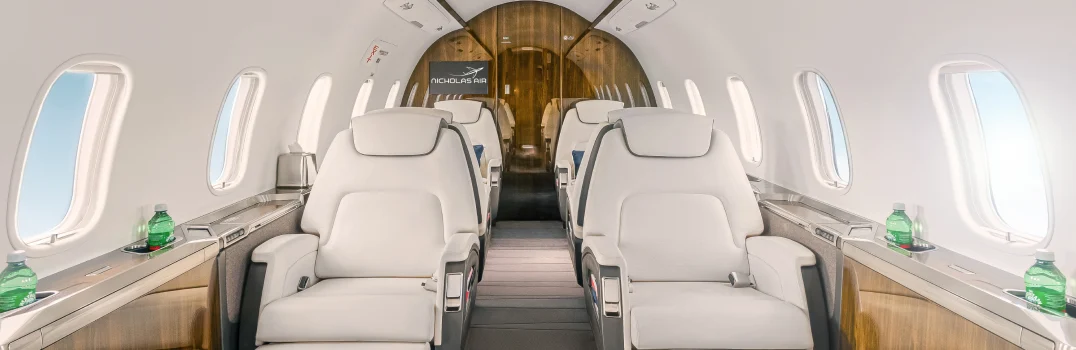
On the aircraft side it’s even more personal. I can’t stand a crumb or a hair on the carpet, it’s OCD, and it’s the death of me. We have a very robust digital process that gives us full visibility on the cosmetic and cabin condition of every airplane throughout the day. Most operators focus only on airworthiness. We take it further because the interior experience is part of what we’re selling. Pilots who come to us from other places often scratch their heads, they’ve never seen anything like the checklists and photo documentation we require. I’ve been able to delegate a lot of that system, but I still sample the checklists. If the standard has slipped, I step back in. That happens more often than I’d like, call it half the time and then the team hears about it. They’ll say, “You improved this a year ago.” My answer is that the expectation keeps rising.
Max Raja: You announced Starlink across the fleet, then the pricing doubled with little warning. As an operator, how has that changed your thinking about the technology that defines the cabin experience?
Nicholas Correnti: It was very disappointing. We were all-in. I was actually proud that we were buying an American product and an American service, something that’s surprisingly rare in the technology side of aviation. We were already paying a premium for it, and I was willing to do that. Then the announcement came with no real warning and a cold take-it-or-leave-it stance. No fleet discussion, no negotiation. I was public about how poorly that was handled. The response was that our dealer status was pulled. Fine. We went back to Gogo Business Aviation.
Gogo has been straightforward about past network issues and has completely re-engineered the product from the bottom up. We’re now in the test phase with the Galileo system, the first aircraft is coming out and we’ll run it side-by-side with Starlink for a period. The marketing around multi-gigabit speeds is impressive, but the practical reality is that twenty megabits up and down already lets you stream, video-call and work. Members don’t need the theoretical maximum. Reliability and a genuine partnership matter more than headline numbers.
Max Raja: NICHOLAS AIR runs on strong convictions, owned aircraft, own pilots, no private equity, measured growth. Which of those principles is challenged most in a continuously changing industry?
Nicholas Correnti: The aircraft themselves, specifically keeping the fleet at the uptime levels required to meet our service commitments. That pressure comes almost entirely from the parts and support environment. A basic flight-control unit can ground an airplane for an unknown period while the same part is prioritised for a brand-new airframe. That is the single largest operational challenge and the most frustrating one.
Five or ten years ago this simply wasn’t the case. After the initial COVID disruption, the industry was understanding. But the same explanation has been used year after year while improvement dates keep being missed. The contrast between the record financial results being reported by the manufacturers and the daily reality for operators is stark.
Max Raja: Nearly thirty years in, setting aside aircraft, members and revenue, what are you most proud of?
Nicholas Correnti: Hearing a competitor speak highly of us. When a NetJets salesperson tells a prospect that NICHOLAS AIR is a genuinely strong company and they have nothing negative to say, that is humbling and flattering. It means we’ve done the job properly.
I’m also proud of the servant-hearted culture. It’s a bit like being a chef. Chefs live for the look on a guest’s face when the food is right. That’s what gets me going, hearing from Members that they feel the value they paid for and more, that when something does go wrong we find a solution and stay attentive. That feedback is what still drives me.
Max Raja: And what’s something you’re still figuring out?
Nicholas Correnti: The right balance with technology. We’re in a significant tech push and I believe we’ve fallen a little behind where we need to be. The bigger question for all of us is what technology can do, versus what it cannot. Our processes are highly specific and hands-on. When you try to automate them, the technology teams quickly discover how much human judgment is still required. AI is something I approach carefully. I’m happy for it to assist with grammar, organisation and routine drafting, but I don’t want people using it to do the thinking for them. If you’re not uncomfortable, you’re not growing, but I also don’t want anyone’s brain to stop being exercised. Finding that line, enough technology to stay efficient, not so much that the human element disappears, is the ongoing challenge.